| Business Type | Examples (Small) | Examples (Large) |
|---|---|---|
| Health care and social assistance | Early Childhood Learning Center, Physical Therapy Office, Dental Office | Assisted Living Facility, Hospital, Private Secondary School |
| Manufacturing | Aircraft Supply Store, Combustion Technology Firm | Truck Manufacturer, Aircraft Data System Manuacturer |
| Retail | Gift Boutique, Variety Store, Auto Parts Shop | Supermarket, Specialty Grocer, Single-Brand Car Dealership |
| Wholesale trade | Security Equipment Distributor, Office Imaging Equipment Distributor | Building Materials Distributor, Electronics Equipment Distributor |
| Computer systems design | Law Firm, Consulting Firm, IT Firm | Computer Hardware Company, Video Game Company, Cloud Computing Company |
| Restaurants | Local Bubble Tea Shop, Local Coffee Shop, Neighborhood Pub | Global Fast Food Chain, Fast-Casual Dining Restaurant |
Local Tax & Fee Policy
How does the ongoing cost of doing business in Kirkland compare? Local tax policy affects the ongoing cost of doing business. Explore how Kirkland’s tax rates compare and how those differences translate into annual costs for representative businesses.
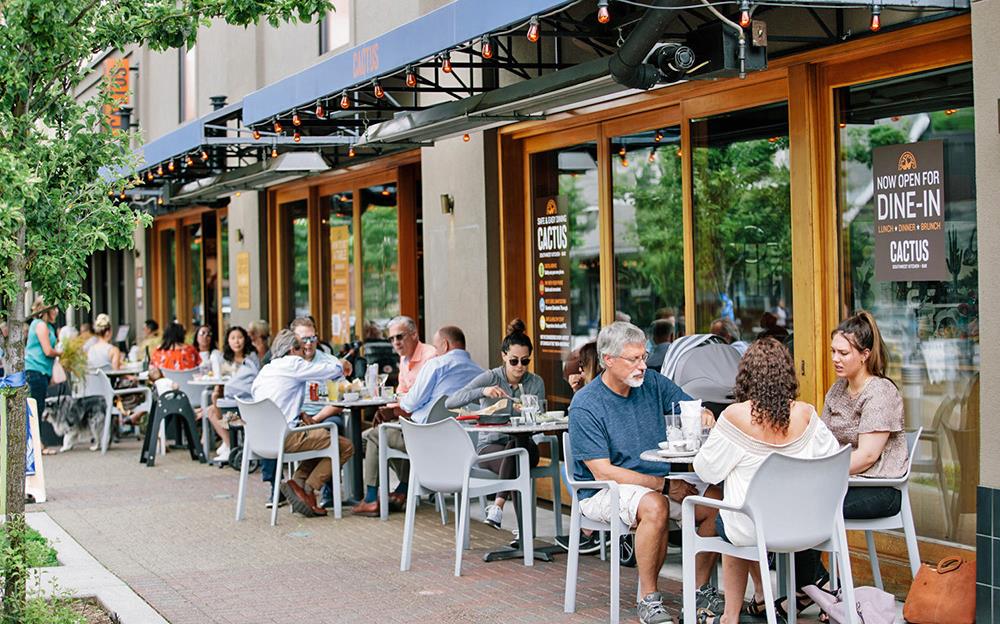
Local taxes and fees – which are an influencing factor in business location decisions – are directly tied to city policy. This section looks at the local tax and fee environment from the perspective of a business deciding whether to operate in Kirkland. It compares Kirkland with four peers - Bellevue, Bothell, Issaquah, and Redmond - across taxes that cities control or influence (business and occupation (B&O) tax, property tax, utility taxes, and the local share of sales tax) and translates those rates into estimated annual tax costs for a set of representative businesses.
Tax rates are only meaningful when applied to an actual business; a rate that looks high in isolation can translate into varying dollar differences based on the business type. To translate tax rates into costs a business might actually experience, ECOnorthwest developed representative small and large business prototypes for six sectors based on Kirkland businesses. The same prototypes are applied across all five cities, allowing the analysis to isolate differences in tax policy rather than differences in the businesses themselves.
See Appendix A: Business Prototypes for additional detail on how the prototypes were developed.
What Does This Analysis Mean for Kirkland?
Kirkland’s overall business tax environment is competitive with its peers. Across the business prototypes analyzed, estimated tax costs are generally similar among the five cities, with Kirkland typically falling near the middle.
Kirkland’s lack of B&O tax is an important competitive advantage, particularly for businesses with high gross revenues. Bellevue and Issaquah levy local B&O taxes, while Kirkland, Bothell, and Redmond do not.
Higher utility taxes are Kirkland’s clearest disadvantage, but their effect varies by business type. This has a modest effect on office businesses while the costs can increase significantly for utility-intensive businesses such as restaurants and manufacturers.
Most differences in business’ total tax bills are outside the City’s direct control. State, county, regional, and other taxes make up a large portion of what businesses pay so differences between peer cities are generally smaller than total taxes suggest.
How Local Taxes Affect Businesses
The three views in this section apply each city’s rates to the business prototypes to estimate what a representative business would actually pay each year, first in local taxes as total dollars, then as a split between locally controlled and other taxes, and finally as a share of gross income, which is the measure most comparable across businesses of different sizes.
See Appendix D: Tax Cost Breakdown by Business Type for additional detail on tax calculations.
Total Cost of Taxes: Tax Type (City Only)
This chart shows the estimated total local tax cost for each business prototype in each city. Totals include B&O tax, property tax, utility taxes, and sales tax on the business’s taxable sales. See Appendix B: Tax Rates by Peer City for more information on tax rates in each city.
TipWhat to notice
Across business types, estimated local tax costs in Kirkland are typically on the lower end compared to peer cities. For a large manufacturer with roughly $200 million in gross income, the estimated annual local tax bill ranges from about $500,000 to $800,000, with Kirkland at $600,000. Small prototypes follow the same pattern at a smaller scale: a small health care practice pays about $4,000 to $12,000 a year, with Kirkland at $5,000.
This is often due to no B&O tax and is especially apparent for computer system design, where local tax costs in Kirkland are around $150,000 and similar to Bothell and Redmond, but much lower than Bellevue and Issaquah at about $300,000 with both cities levying local B&O taxes for large businesses.
See Appendix C: Total Cost of Taxes by Tax Type to see the combined tax calculations of city, state, and regional taxes for each business type.
Total Cost of Taxes: Local vs. State
For each business type, this chart divides the estimated annual tax bill into the portion set by the city (or by local districts within it) versus the portion set by the state, county, and regional agencies.
TipWhat to notice
The locally controlled share of a business’s taxes ranges from less then a tenth to roughly a third, depending on the business type, and is fairly consistent across the five cities. For large businesses, wholesale trade has the biggest local share of total tax at about 20 to 28 percent. The local share is about 10 to 14 percent in health care and social assistance, 14 to 22 percent in manufacturing and retail, and 7 to 13 percent in restaurants and computer system design. Bothell’s local share is a few points higher than the others in almost every category, reflecting its higher property tax levy.
The local share is highest for businesses that occupy more taxable space relative to their revenue (property tax is a local tax) and lowest for businesses whose tax bill is dominated by state B&O tax on high gross receipts, such as wholesale trade. The practical implication is City policy can influence roughly a third of the tax bill for a space-intensive business and only about a tenth of it for a revenue-intensive one.
Cost of Taxes as Percent of Gross Business Income
Dividing the total tax cost by gross business income puts businesses of very different sizes on the same footing and shows how much of each dollar of revenue goes to state and local taxes in each city.
TipWhat to notice
Measured against gross income, the tax burden clusters tightly by business type and varies little by city. All industry types pay from 2 to 4 percent of gross income in state and local taxes in every city. Within each business type, the difference between the lowest- and highest-cost city is typically two to five tenths a percentage point of gross income.
Appendix
Appendix A: Business Prototypes
Each prototype is defined by its employment, gross business income, the amount of space it occupies, and taxable value of that space. These are the inputs that drive the taxes a business pays: gross income drives business and occupation tax, taxable value drives property tax (paid directly by an owner-occupant or passed through in rent), floor area and employment drive utility consumption and therefore utility taxes, and retail sales drive sales tax. The small and large versions of each prototype are drawn from the distribution of actual Kirkland businesses in each sector, so togeher, the versions provide a feasible range of firms the City is most likely to attract or retain rather than describing a single hypothetical company.
| Sector | NAICS | Small | Large | Small | Large | Small | Large |
|---|---|---|---|---|---|---|---|
| Health care and social assistance | 62 | 11 | 101 | $1,455,972 | $13,368,476 | 10,817 | 99,317 |
| Manufacturing | 31-33 | 20 | 565 | $7,056,259 | $199,339,330 | 37,000 | 1,045,250 |
| Retail | 44-45 | 8 | 105 | $1,438,445 | $18,879,595 | 7,000 | 91,875 |
| Wholesale trade | 42 | 12 | 62 | $11,510,743 | $59,472,172 | 21,000 | 108,500 |
| Computer systems design | 5415, 5192 | 6 | 155 | $4,079,709 | $105,392,504 | 1,110 | 28,675 |
| Restaurants | 7225 | 14 | 65 | $1,430,615 | $6,642,142 | 6,720 | 31,200 |
Sources: City of Kirkland Business License data, QCEW data, Washington Department of Revenue’s Retail Sales data, and King County Assessor Data.
Appendix B: Tax Rates by Peer City
Washington cities draw on a limited set of local revenue tools. This section compares the rates each peer city has adopted for the four that matter most to businesses, and separates the portion of each rate the city sets from the portion set by the state, county, or regional agencies. The distinction matters: when a Kirkland business compares its tax bill with a Bellevue business, most of the bill is identical because it comes from the same state and county rates.
The chart below shows, for each tax type, the combined rate a business faces in each peer city and how much of that rate is set locally. Use the tabs to switch between business and occupation (B&O) tax, property tax, utility taxes, sales tax, and other taxes/fees.
TipWhat to notice
Kirkland, Bothell and Redmond do not levy a local B&O tax on gross receipts while Bellevue and Issaquah do. For businesses with high gross revenue and thin margins, this is the single largest local tax difference in the peer group, and it works in Kirkland’s favor. Businesses in all five cities pay the state B&O tax at the same rates. At both the state and city level (where a city levies one), rates vary by activity (retailing, wholesaling, manufacturing, and services are taxed at different rates).
TipWhat to notice
The combined levy rate in Kirkland is about $8.46 per $1,000 of assessed value, in the middle of the peer group: below Bothell ($9.74), above Bellevue ($7.43), and close to Redmond ($8.40) and Issaquah ($8.30). The state portion ($2.25) is identical everywhere; the differences come from the city levy and overlapping regional portions such as schools, fire, hospital, and library districts, which vary by location. Kirkland’s own regular levy is among the lower city rates in the group; the local total is lifted by the district levies that apply within Kirkland.
TipWhat to notice
Combined sales tax rates are nearly identical, ranging from 10.3 to 10.5 percent across Kirkland and all peer cities. The state’s 6.5 percent and the regional transit and county components make up the great majority of the rate; the city portion makes up only 1.0 to 1.3 percent. Sales tax is collected from customers rather than paid out of a business’s own revenue, so it bears on price competitiveness more than on operating margins, and a tenth of a point of difference is unlikely to move a location decision.
TipWhat to notice
This is where Kirkland stands out on the high side. Kirkland taxes water at 11.8 percent, wastewater at 9.5 percent, solid waste at 10.5 percent, and stormwater at about 7 percent, compared with 6 percent or less for most of those services in the peer cities. Electricity, natural gas, cable, and telephone are taxed at 6 percent, in line with the peers. Summed across utility categories, Kirkland’s local utility tax rates are the highest of the five cities and Redmond’s are the lowest. Because utility bills are a small share of most businesses’ costs, the dollar effect is modest for office-type businesses and larger for water- and waste-intensive ones such as restaurants and manufacturing.
Note: Head tax only applies to companies over 100 employees.
Note: Bothell has a business license fee of $5,358 (not pictured in this chart).
Appendix C: Total Cost of Taxes by Tax Type
This chart shows the estimated combined total annual state, regional, and local tax cost for each business prototype in each city. Totals include B&O tax, property tax, utility taxes, and sales tax on the business’s taxable sales.
TipWhat to notice
The five cities have similar costs across each business prototype, with Kirkland generally near the middle. For a large manufacturer with roughly $200 million in gross income, the estimated annual tax bill ranges from about $3.7 to $4.1 million, with Kirkland at $3.8 million. Small prototypes follow the same pattern at a smaller scale: a small health care practice pays about $55,000 to $66,000 a year, with Kirkland at $57,000.
Kirkland is the lowest or second lowest for wholesale trade (about $946,000 for the large prototype, versus $977,000 in Issaquah). Bothell is generally the highest-cost city because of its property tax levy, and Bellevue is generally the lowest for property-intensive businesses despite its B&O tax, because its combined property tax rate is the lowest in the group.
The totals are often made up of taxes the City does not set. For computer systems design businesses, sales tax accounts for a substantial portion of their total tax while state B&O tax is the largest line item. The city-controlled differences between peers, mostly property and utility tax, amount to tens of thousands of dollars a year for a large business and a few thousand for a small one.